The house on the Gauja, and the long way to Grand Rapids
Four generations of one Latvian family — a forester in Riga, a summer home on a river, a canoe in the dark, and a new life on the west side of Grand Rapids, Michigan.
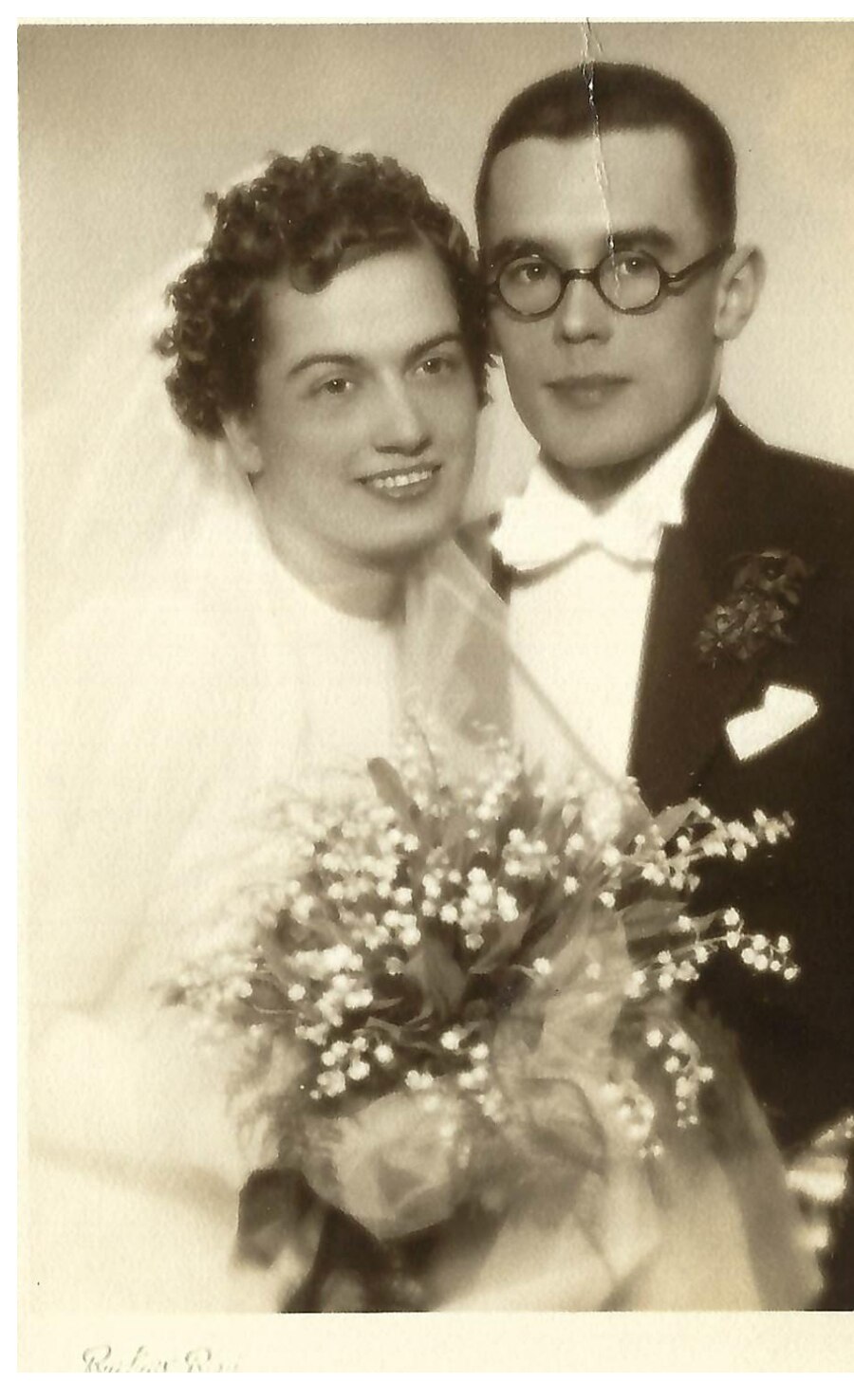
This is our family's story — pieced together from my grandmother's own memories, a detailed written account kept by a cousin, and a scrapbook of photographs going back five generations. My grandma's in her eighties now, and some of what she remembers has softened around the edges — a name, a distance, a year. Where I could check her story against the written record, I did; where I couldn't, I just kept her words the way she told them. Either way, I think it's worth writing down.
The family at the center of it is the Robežnieks family of Riga and Cēsis, and the Kurciņš family they married into. This is the story of how they lost a country and found a new one.
A forester, a zoo, and a house on the river
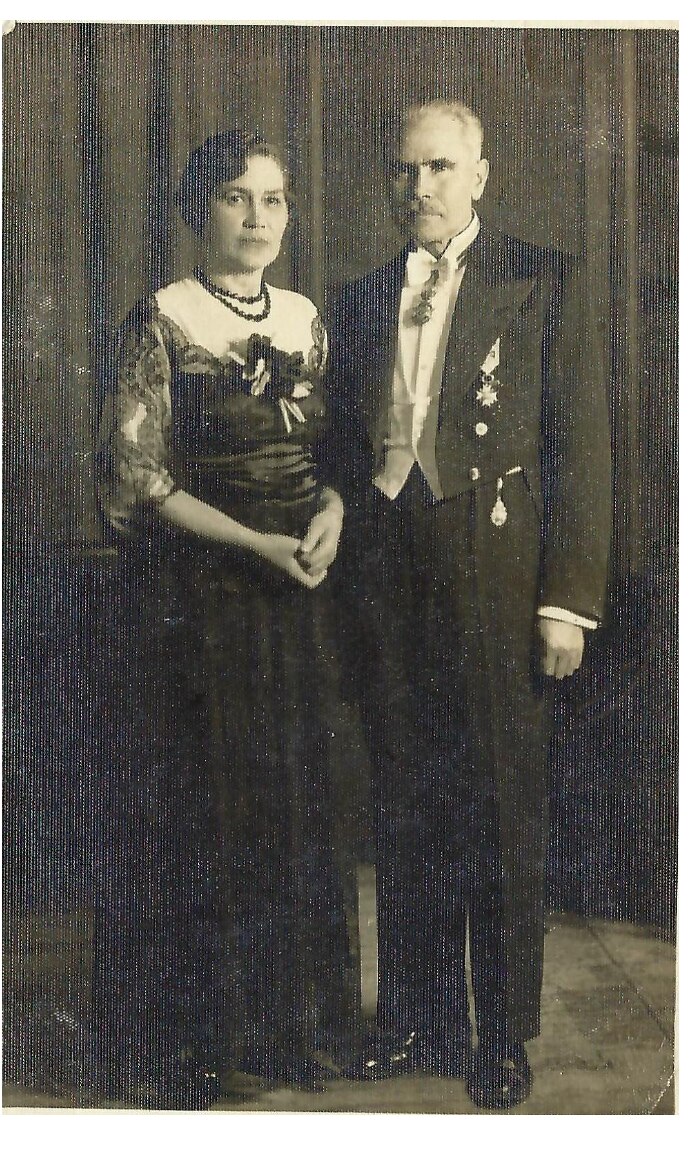
My great-great-grandfather, Jānis Robežnieks, spent his career as a director in Latvia's Forestry Department, running the country's timber trade and looking after its public forests. He helped found the Riga Zoo, sat on its board all through the 1930s, and got decorated for public service — you can see the medals in his 1935 portrait below. His work kept him mostly in Riga, but the family had inherited a piece of land called Pušklaipi, a farm estate on the Gauja River near the town of Cēsis, and that's where they spent their summers.
Pušklaipi had two upstairs bedrooms for the family, and a main floor rented out to a family who lived there year-round and farmed the land. By every account it was a happy place — cousins and friends from Cēsis always coming through, celebrations, long summers by the water. My great-grandfather Leons Robežnieks — Jānis's son — took over the property as a young man, living there with his new wife, Karina (Kurciņš) Robežnieks, whom he married in January 1939.
Sources: family scrapbook captions; written family account by a cousin of my grandmother, based on interviews with Karina Robežnieks in her late 90s.
Who gets to stay
In June 1940, the Soviet army occupied Latvia, and that was the end of its independence. Pušklaipi got nationalized, and the family who'd been renting the main floor for years suddenly had power over it — the new communist administration put the renter in charge of deciding whether the Robežnieks family, who'd actually owned the land, would even be allowed to keep living there.
The family account says the renter thought it over for a while and finally said something that translates roughly to "well, might as well have them stay." It was a small mercy in a year that didn't offer many. That one decision is the whole reason the family kept any foothold at Pušklaipi through everything that came after.
The Soviets ran a sham parliamentary election that same year, with a single communist-approved slate of candidates. My great-grandparents walked into Cēsis to vote anyway, worried about what an unstamped passport might mean for the family — they already had one small child to think about, and another on the way.
The night of the deportations
On June 14, 1941, the Soviet regime deported tens of thousands of Latvians to Siberia in a single night — entire families loaded into cattle cars with no warning. Karina's aunt came close to being taken herself: she worked at a government publications office in Riga and had been kept late typesetting a big, secret project in the days before. She went to work the next morning with no idea what had happened overnight, and found her own boss being led away by the secret police.
The Chekists' list of who to arrest didn't show Karina's maiden name or her married name. A neighbor, asked whether "Karina Petersons" had ever lived there, answered: "No one by that name has ever lived here."
It really was just luck, plus a bit of mistaken paperwork, that kept Karina off that list. Rumors of a second wave of deportations sent much of the extended family into hiding in the forest near Cēsis for weeks that summer — something like ten people sheltering together, including neighbors and a minister from town, fed by the women of the household making sandwiches for ten adults without anyone quite saying out loud what they were doing or why. The second wave never came: Germany invaded Soviet-held territory at the end of June, and the Soviet army pulled out of the area entirely.
Officers in the house
By the summer of 1944, with the Eastern Front closing back in, a German officer showed up at Pušklaipi and announced the house was needed to billet German officers. My great-great-grandmother, who'd spoken German fluently since childhood near the Estonian border, stood her ground with the colonel in charge — family lore has her telling him, "you do things just like the Russians do," which, somehow, got a laugh instead of trouble. The family was allowed to stay, though the tenant family downstairs was evicted outright, and my great-great-grandmother had five minutes to clear her own upstairs room for the officers.
For a while the German soldiers were actually kind to the kids in the house, sharing out pieces of chocolate. But it was clear the war, and the family's time in Latvia, was ending.
One night on the river
The family got out of Latvia three different ways, within days of each other. Karina got permission to travel by train to Germany and then on to Prague, with help from a family friend, and left in late August 1944 with her two-year-old daughter, Ilze, and her own mother. My great-great-grandmother and the rest of that branch of the family made it out by ship from Riga to Danzig.
Leons stayed behind alone. At 32, he was old enough to get pulled into the retreating German army, and a military vehicle had already come by the house to warn him that conscription could happen any day. With a neighbor's help, he pulled a collapsible canoe down to the Gauja River and paddled through the night — past cliffs and rapids, something like 25 to 30 miles downriver — to the town of Sigulda, where Latvian soldiers found him and helped him on toward Riga. He talked his way onto one of the last trains to Prague and got there a few hours before Karina did; she found him asleep from exhaustion on a couch. It was the end of the family's life at Pušklaipi, and, as it turned out, the end of an independent Latvia for another five decades.
This is the same story my grandmother remembers as "one of the family stayed behind and escaped the day before, down a river, in a kayak" — the distance she recalls, about 32 miles, matches the written account almost exactly.
Displaced
From Germany, the family moved through a string of Displaced Persons camps — makeshift communities of refugees waiting, for years, to find out where in the world they'd even be allowed to go next. One camp had previously housed American soldiers and was still laid out like barracks. Every kid there got a dose of cod liver oil each day, and a penny for taking it without complaining. My grandmother saved hers up to buy an Alexandertorte — a layered cookie-cake, the recipe for which is still sitting in the family's cookbook today.
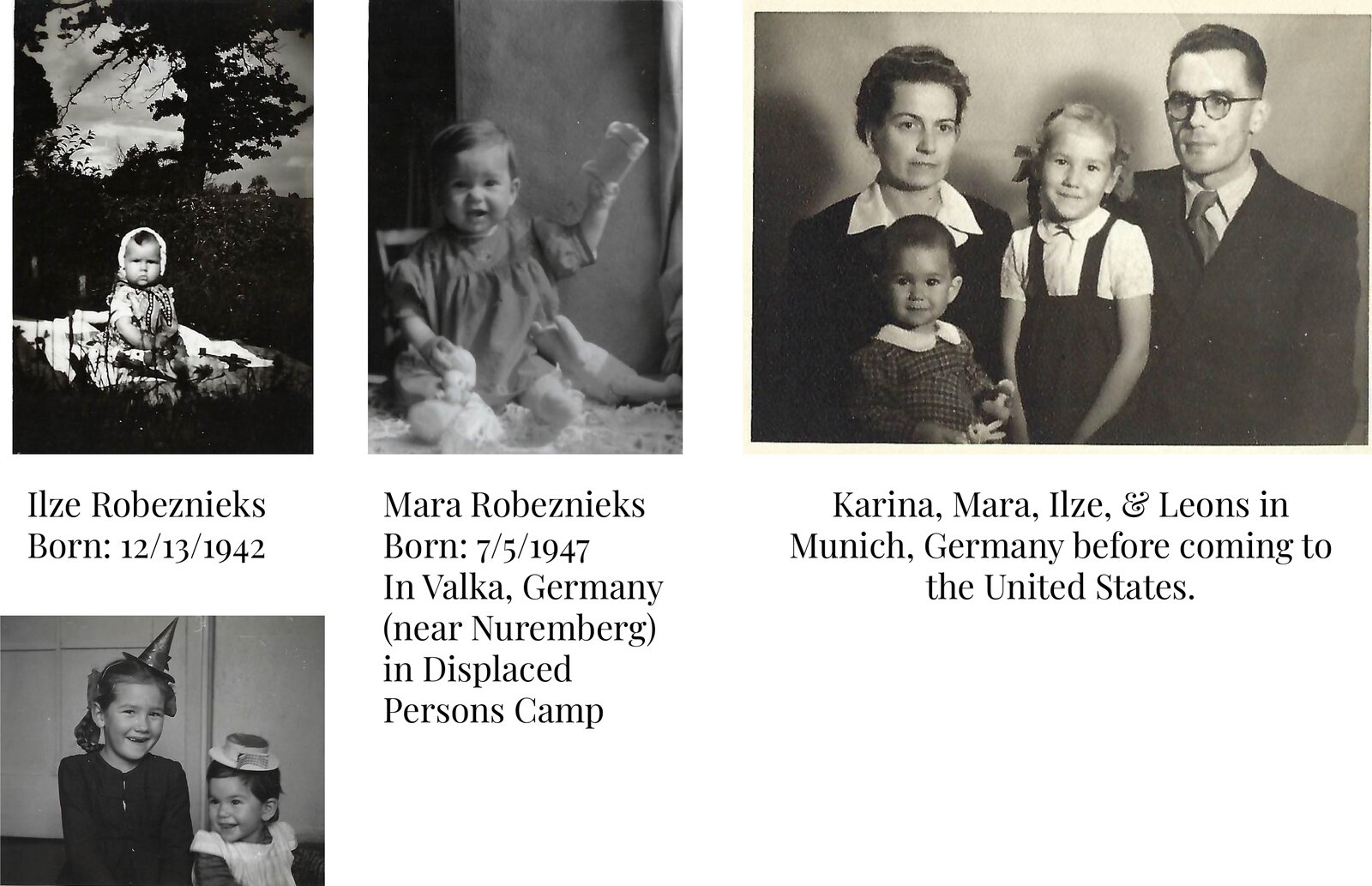
To make a little money, the kids in the family would travel between camps performing music for whoever was around. American soldiers passing through would often hand out Hershey bars, which the kids loved, and some of the family really had a gift for baking — making the most of very little, and somehow still making it taste, by every account, remarkable.
Eventually they moved to a nicer place in Munich — two whole rooms, which felt spacious after the camps. My grandmother remembers Christmas there as close to magical: real trees, lit with real candles clipped onto the branches, the whole room glowing. It was in this stretch that her appendix burst, at age four. What saved her, by her own account, was her father's connections with the Americans — connections he'd built through his English and his work, and they got her the medicine she needed in time. "As a kid, it really wasn't that bad," she says now. "It was fun — we had friends, we had school. It was tough on the adults."
A sponsor in East Grand Rapids
To leave the camps at all, the family needed an American sponsor willing to vouch for them — housing, a job, someone to answer for them. They were sponsored by the Orr family of East Grand Rapids. Leons, who spoke English, got hired quickly and worked his way up in the Orrs' factory, one of a lot of hard-working Latvian refugees who did the same; the ones who moved up fastest, him included, tended to already have a university degree from home.
The family got to the United States in May 1950 and lived, at first, with a doctor's family in Grand Rapids. The doctor's daughter, who wanted to be a teacher, gave my grandmother her first English lessons before school even started. Once the family had their own apartment and the school year began, my grandmother — who would've been about seven and a half — was placed in kindergarten to start learning the language, and got moved up to her actual grade, second, by the end of the year.
Two brothers, University of Michigan
Two brothers in the family went through the University of Michigan — part of that same wave of newly-arrived Latvians who, as my grandmother puts it, tended to work harder and rise faster because they already had a university degree from back home. One brother built a career in technology at AT&T. The other stayed in school: a Ph.D. and postdoctoral work at Michigan, then Harvard, before an academic career that took him to the University of Wisconsin and, eventually, back to Michigan again.
Tucked in among the family's own photographs is a newspaper clipping the family kept and never really explained — an award announcement for a chemist named Edwin Vedejs, born in Latvia, who grew up in a Displaced Persons camp in Germany after 1945, got his Ph.D. at the University of Wisconsin–Madison, did postdoctoral research at Harvard under future Nobel laureate E.J. Corey, spent decades on the faculty at Wisconsin, and came back to the University of Michigan in 1999 as the Moses Gomberg Professor of Chemistry. The path matches what my grandmother remembers of her uncle's career closely enough that it's very likely the same person — though the family history doesn't spell out the exact connection, so I'd call it a strong match rather than a sure thing.
Source: a Chemical & Engineering News clipping kept in the family's own photographs, alongside my grandmother's account of her uncles' careers.
Growing up on the west side
The family bought their own house the year my grandmother was in 7th grade, and from there she took the bus across the city to Grand Rapids Central High School — the best school in the city at the time, by reputation, and structured 7th through 12th grade, so it ended up being basically all of her remaining school years in one building.
Life on the west side revolved around John Ball Park and its zoo, which the family went to most weekends and every summer. In winter, the big pond next to the zoo froze solid enough to skate on. And whenever they got the chance, the family drove out to Grand Haven to fish, walk the pier, and spend the day at the Lake Michigan beach — with no air conditioning at home, that lake breeze in summer was something to look forward to all week, even if everyone came home a little sunburned. Even after he got sick with cancer, my great-grandfather Leons still insisted on sitting outside in the sun whenever he could — wheelchair and all, even in January.
Places they lived and went
Photos of the real places from the story. Each slot below is waiting for a picture.
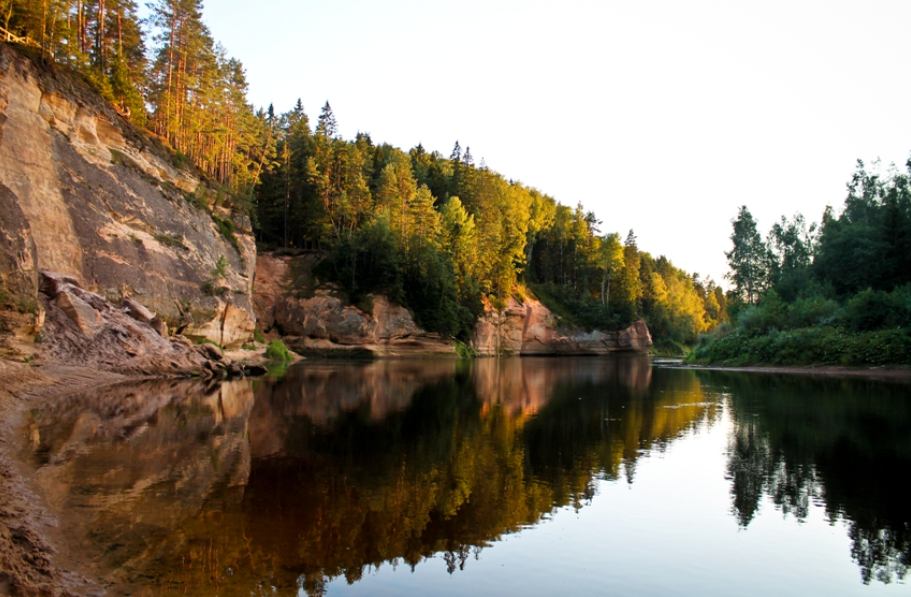
The Gauja River
The river they paddled down in 1944.
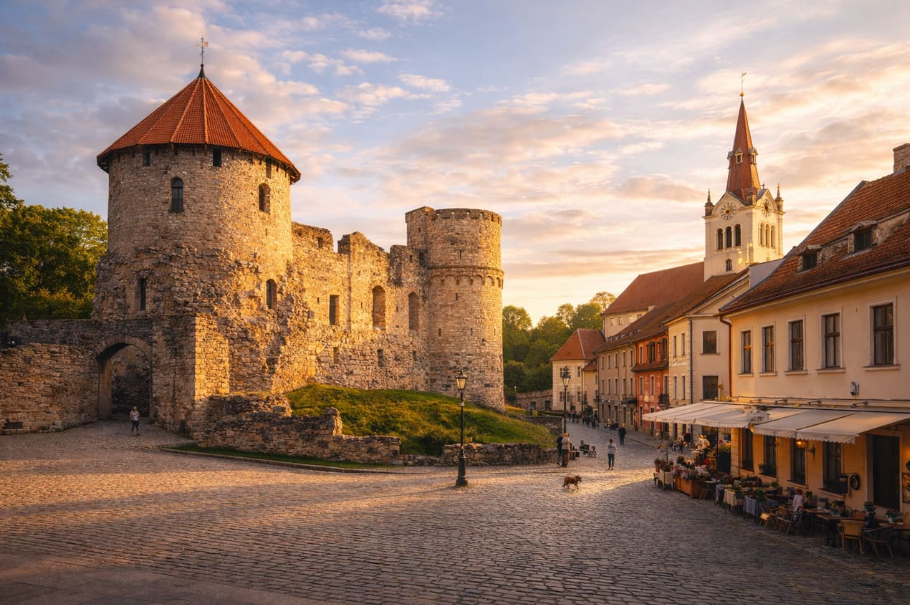
Cēsis
The town where they voted in 1940 and where the family was known.
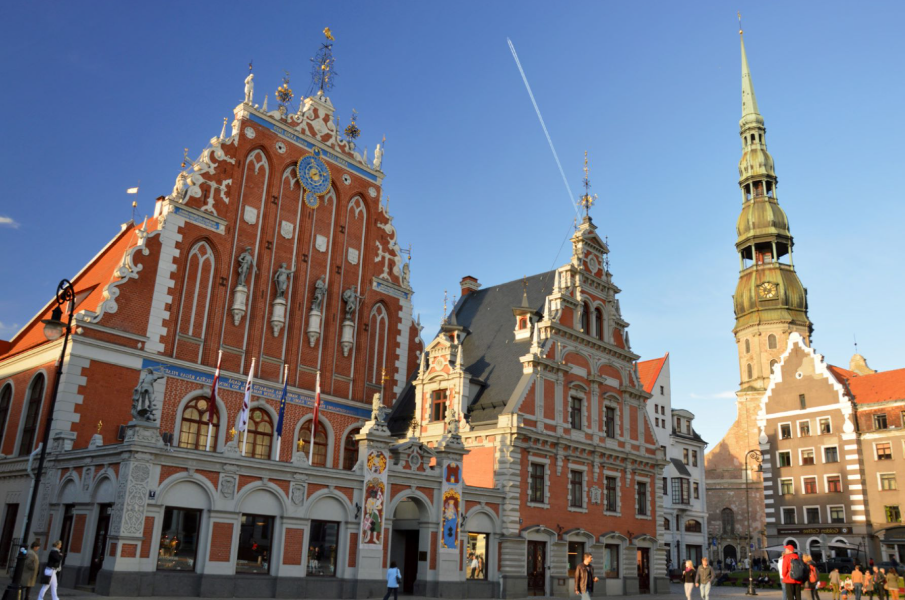
Riga
Where Jānis worked and where Ilze was born in 1942.
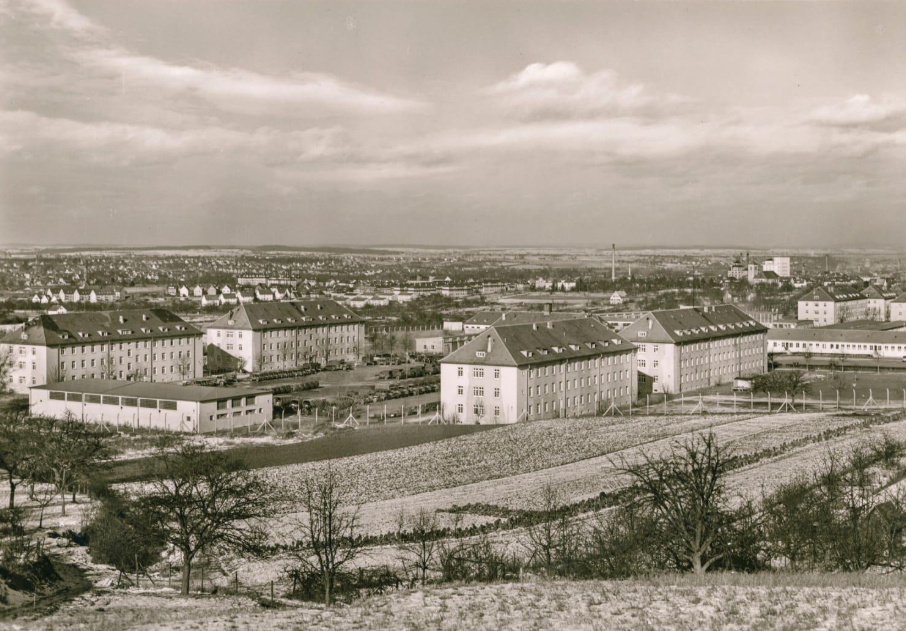
DP camps
Former American barracks, cod liver oil, and penny cookies.
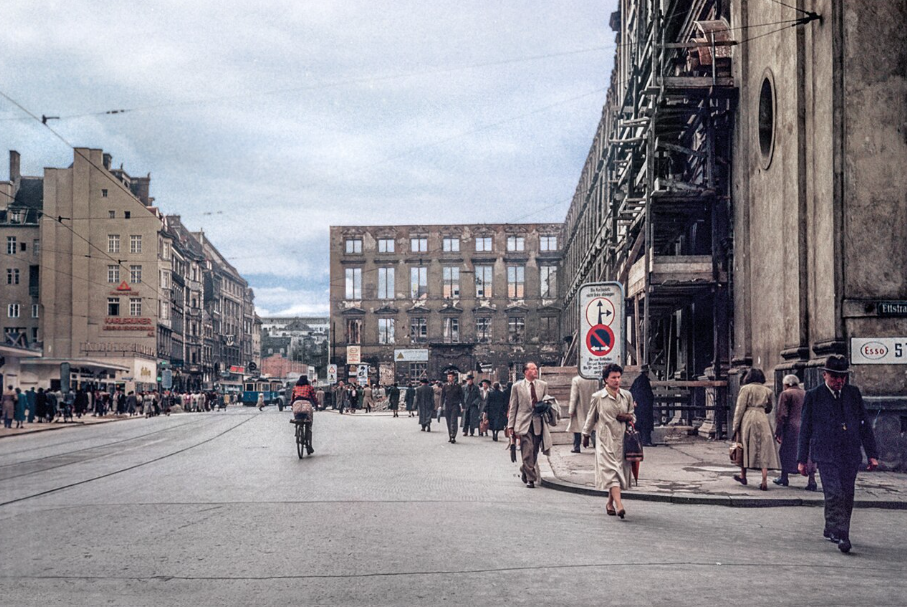
Munich
The two-room home with the Christmas trees.
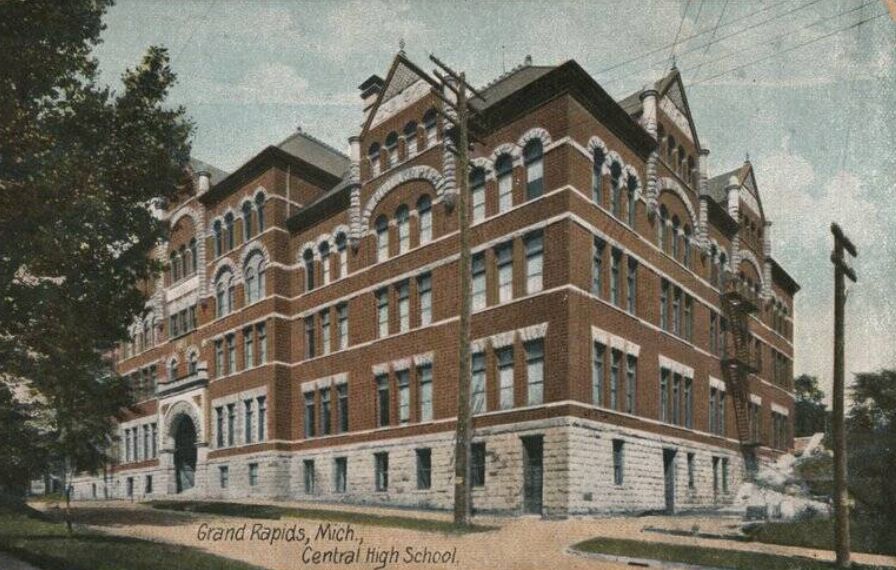
Grand Rapids
The west side, the bus to Central High, and the Orr family factory.

John Ball Park
Weekend visits, summer trips, and winter skating.
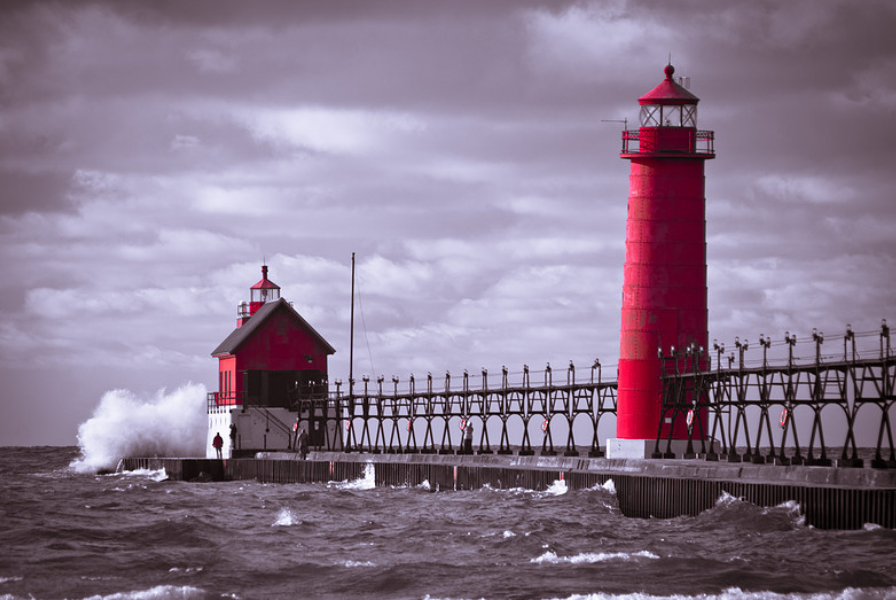
Grand Haven
Fishing, pier walks, and the lake breeze.
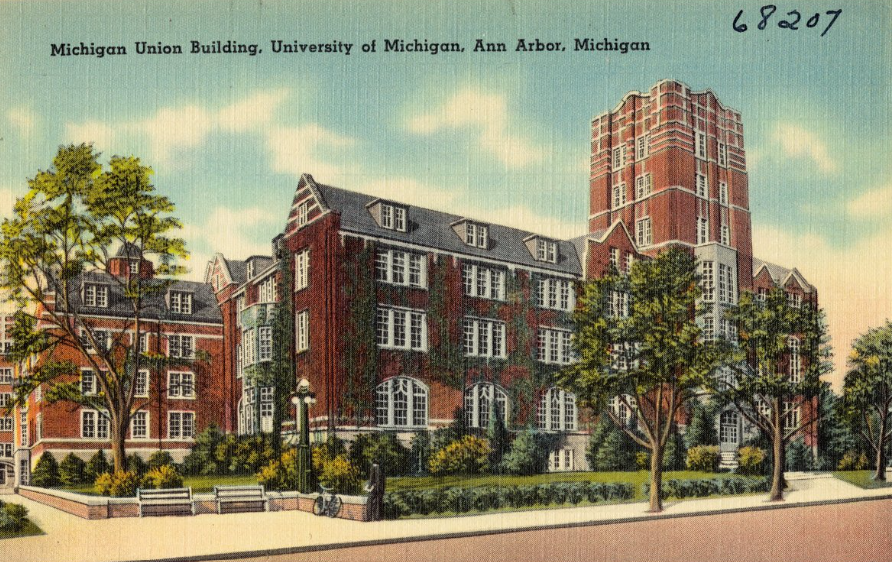
Ann Arbor
The two brothers' university years.
The family
Five generations, from a forestry director in Riga to a family in Grand Rapids — as recorded in the family scrapbook.
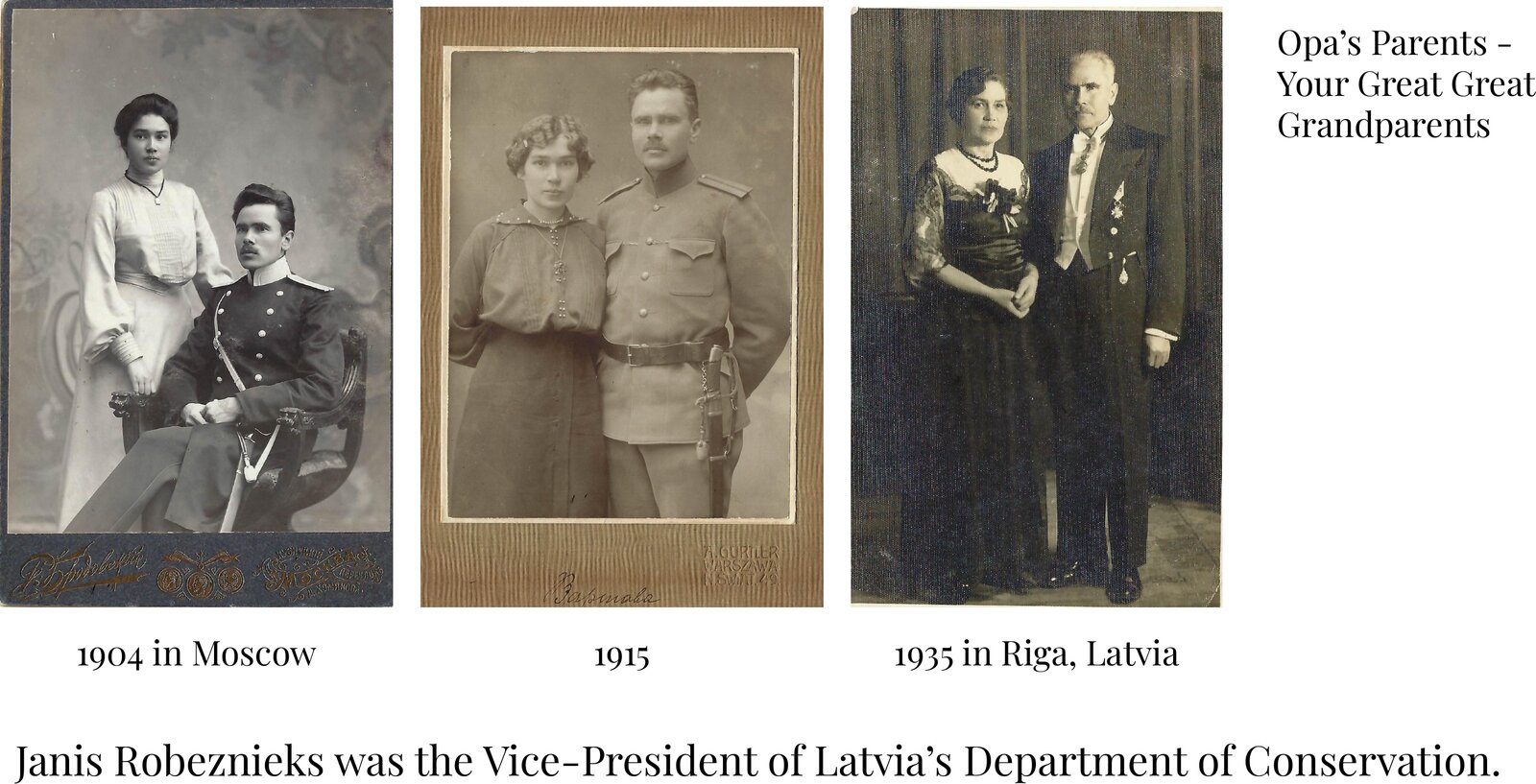
Jānis Robežnieks
Vice-President, Latvia's Department of Conservation. Photographed 1904 (Moscow), 1915, and 1935 (Riga).
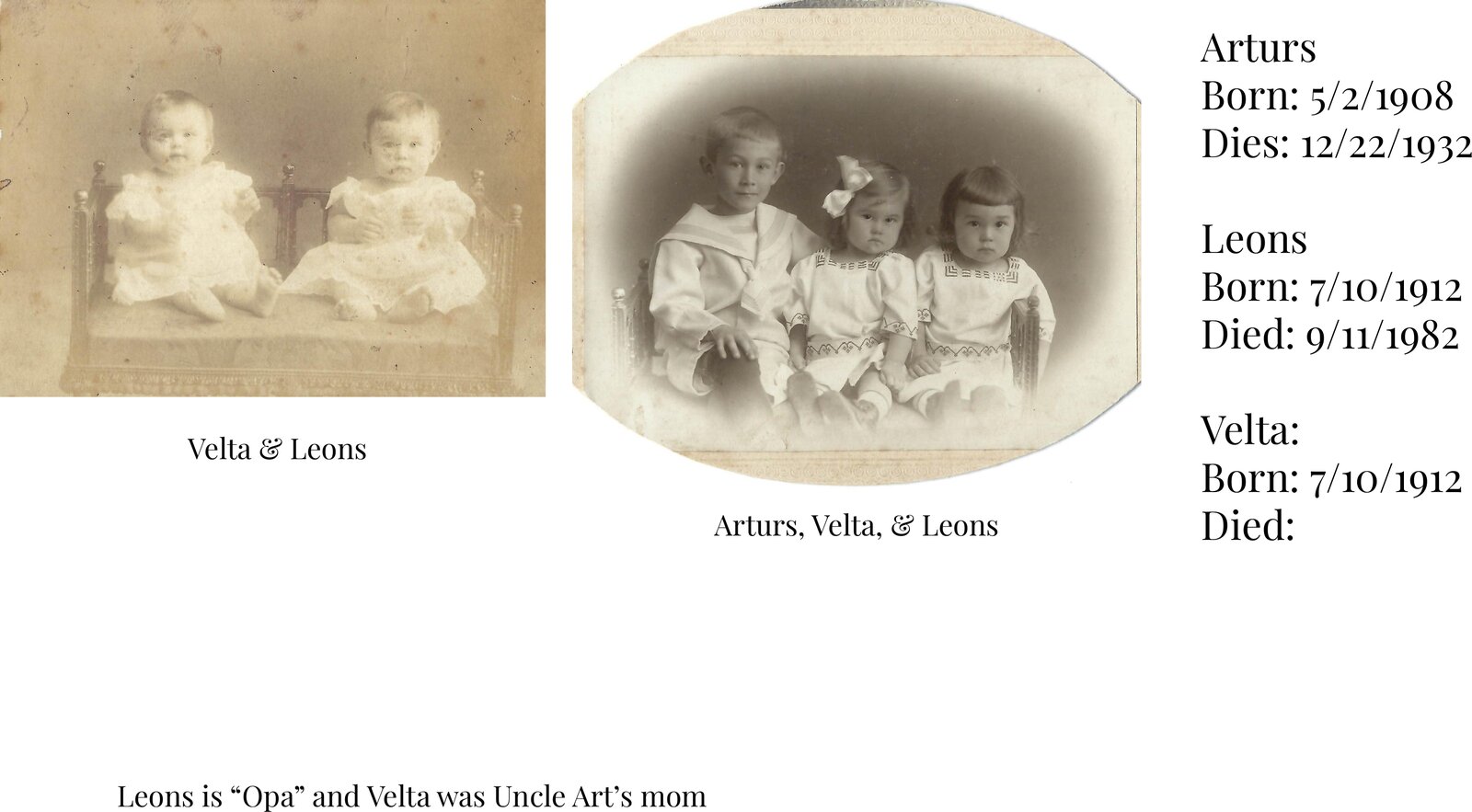
Artūrs, Leons & Velta
Leons (b. 1912 – d. 1982) is "Opa." His twin sister Velta (b. 1912) and brother Artūrs (1908–1932) are pictured as children.
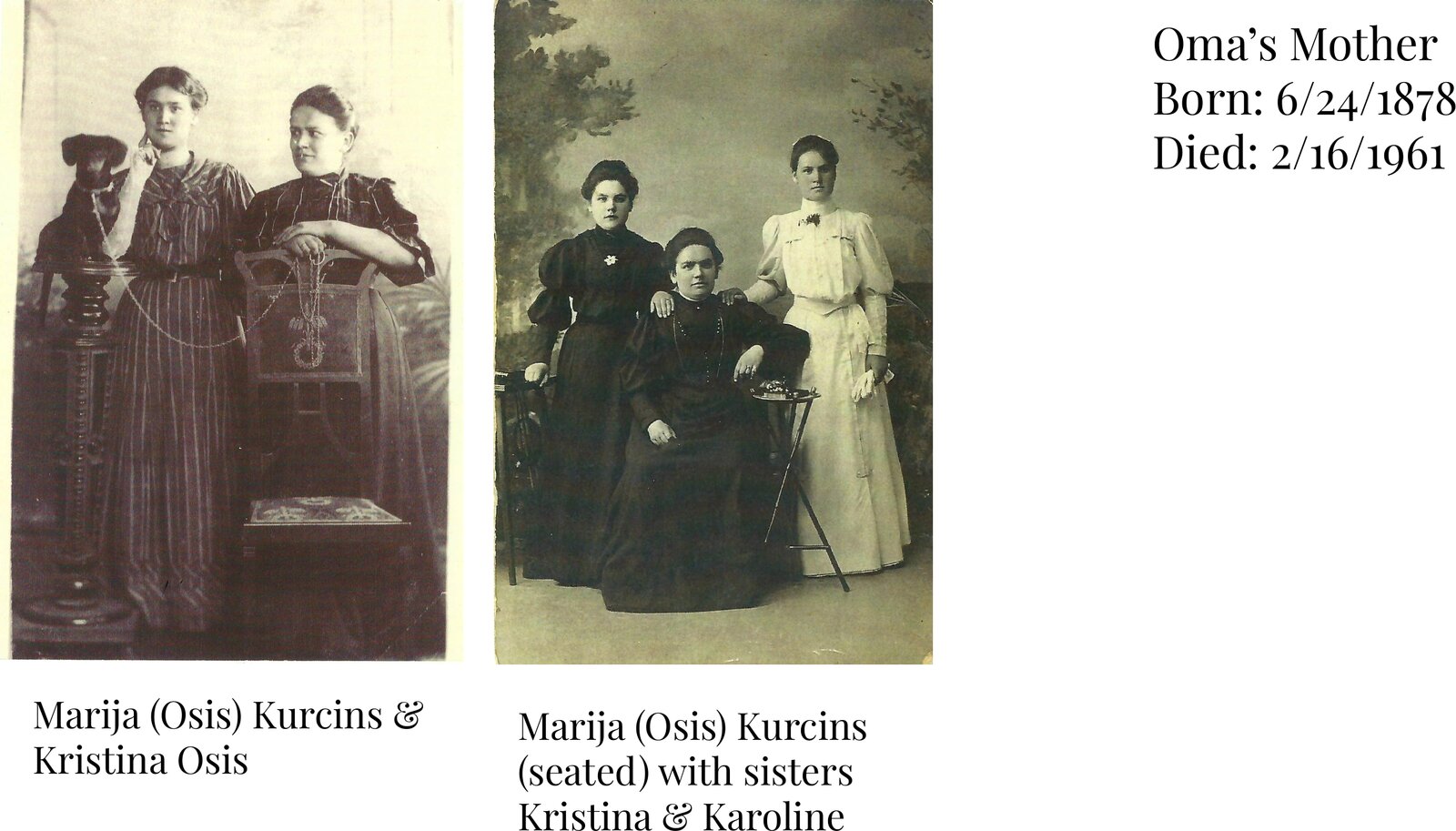
Marija (Osis) Kurciņš
Oma's mother (b. 1878 – d. 1961), pictured with her sisters Kristīna and Karoline.
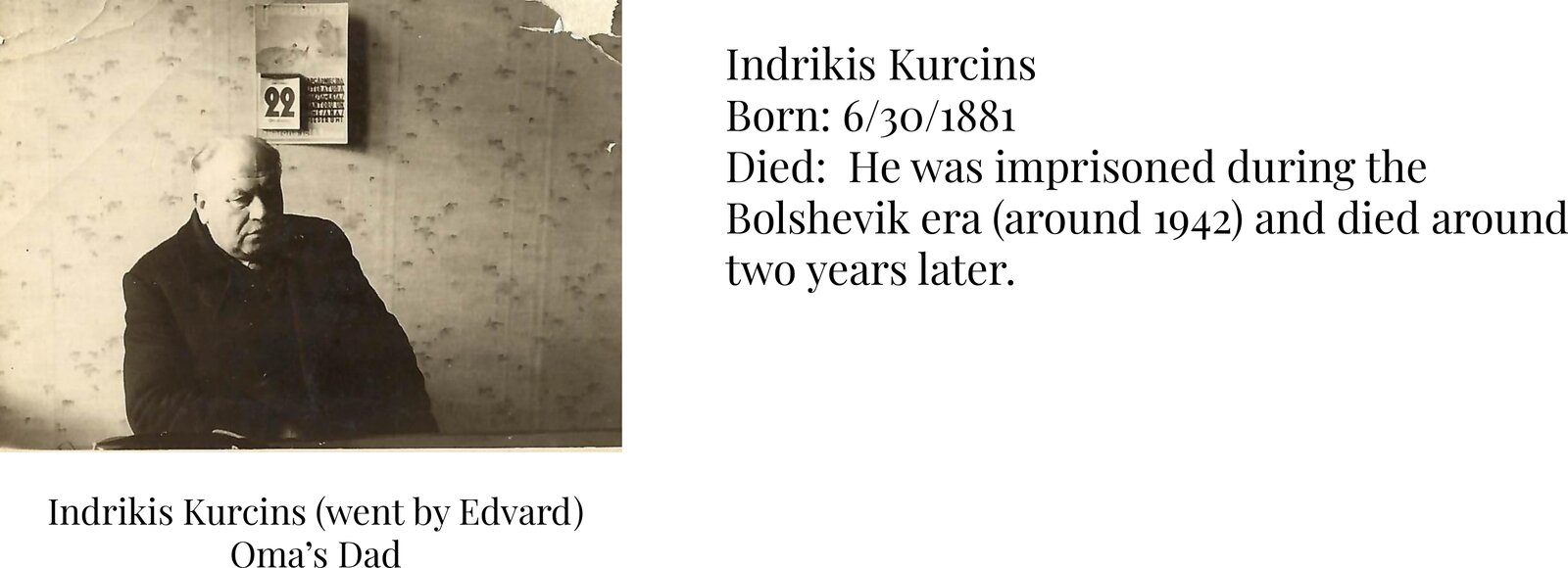
Indriķis "Edvard" Kurciņš
Oma's father (b. 1881). Imprisoned during the Bolshevik era around 1942; died roughly two years later.
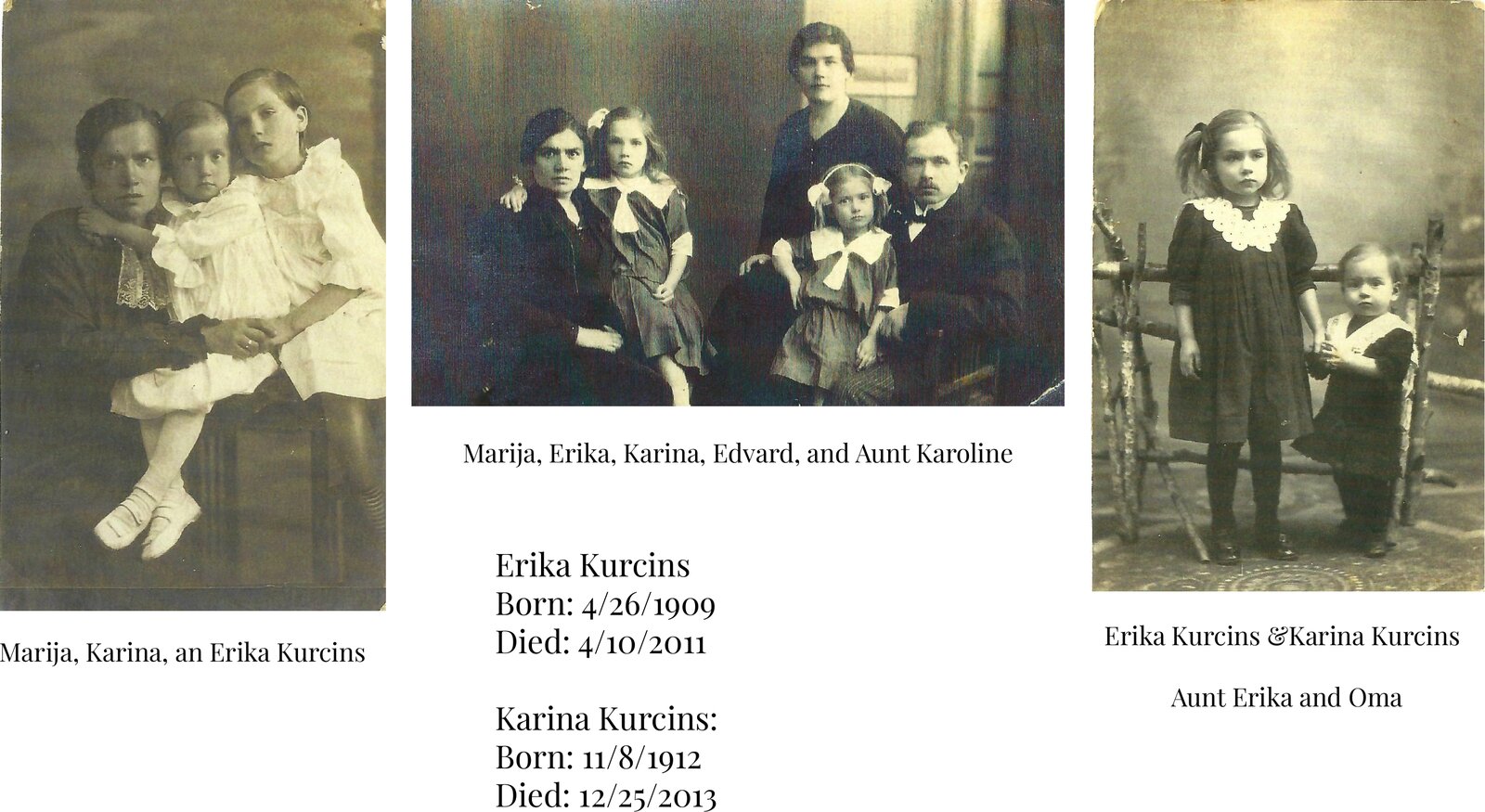
Erika & Karina Kurciņš
Erika (1909–2011) and Karina (1912–2013, "Oma") — sisters, photographed together across several decades.
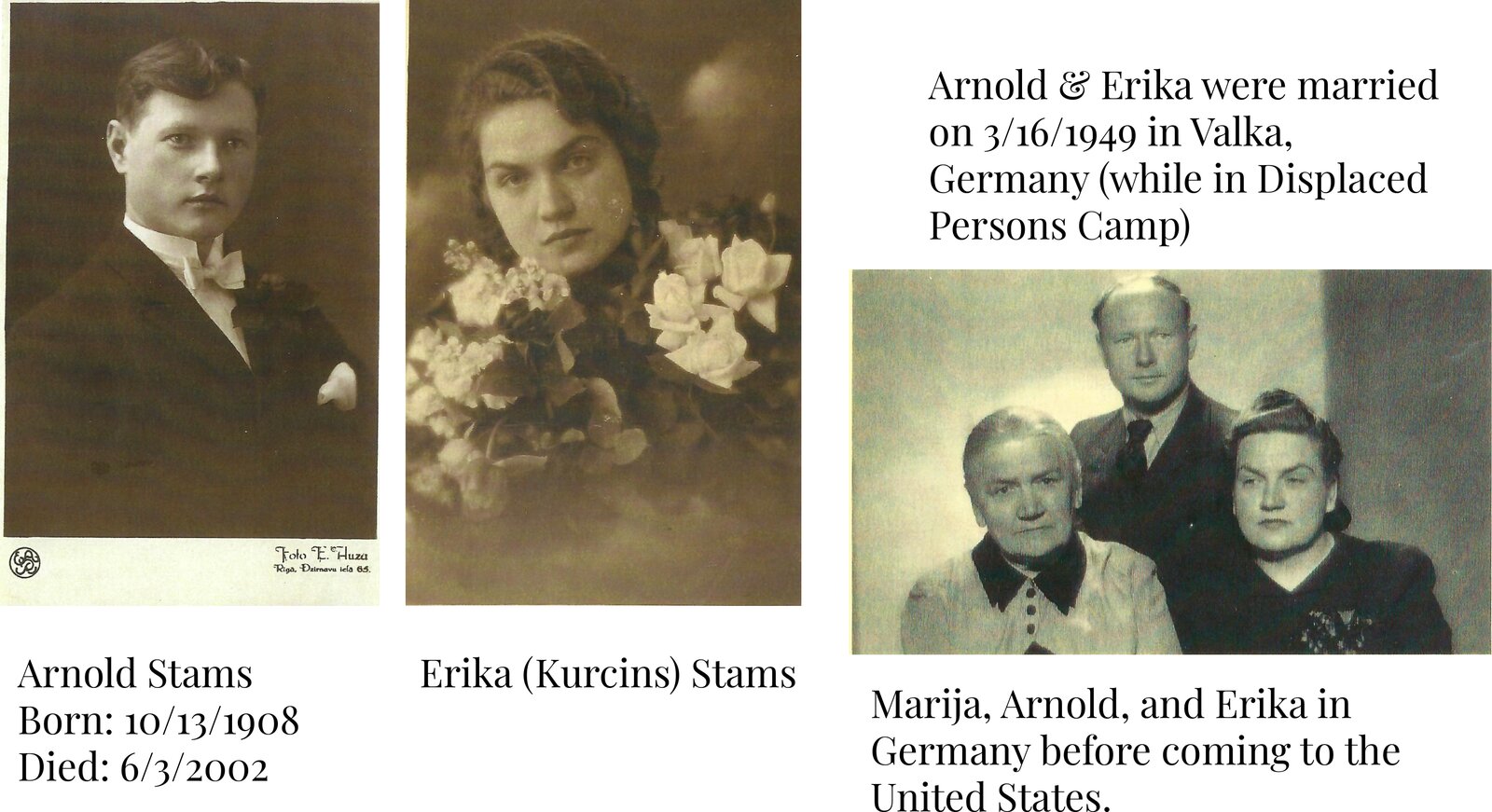
Arnold & Erika Stams
Married March 16, 1949, in Valka, Germany — while still in a Displaced Persons camp.
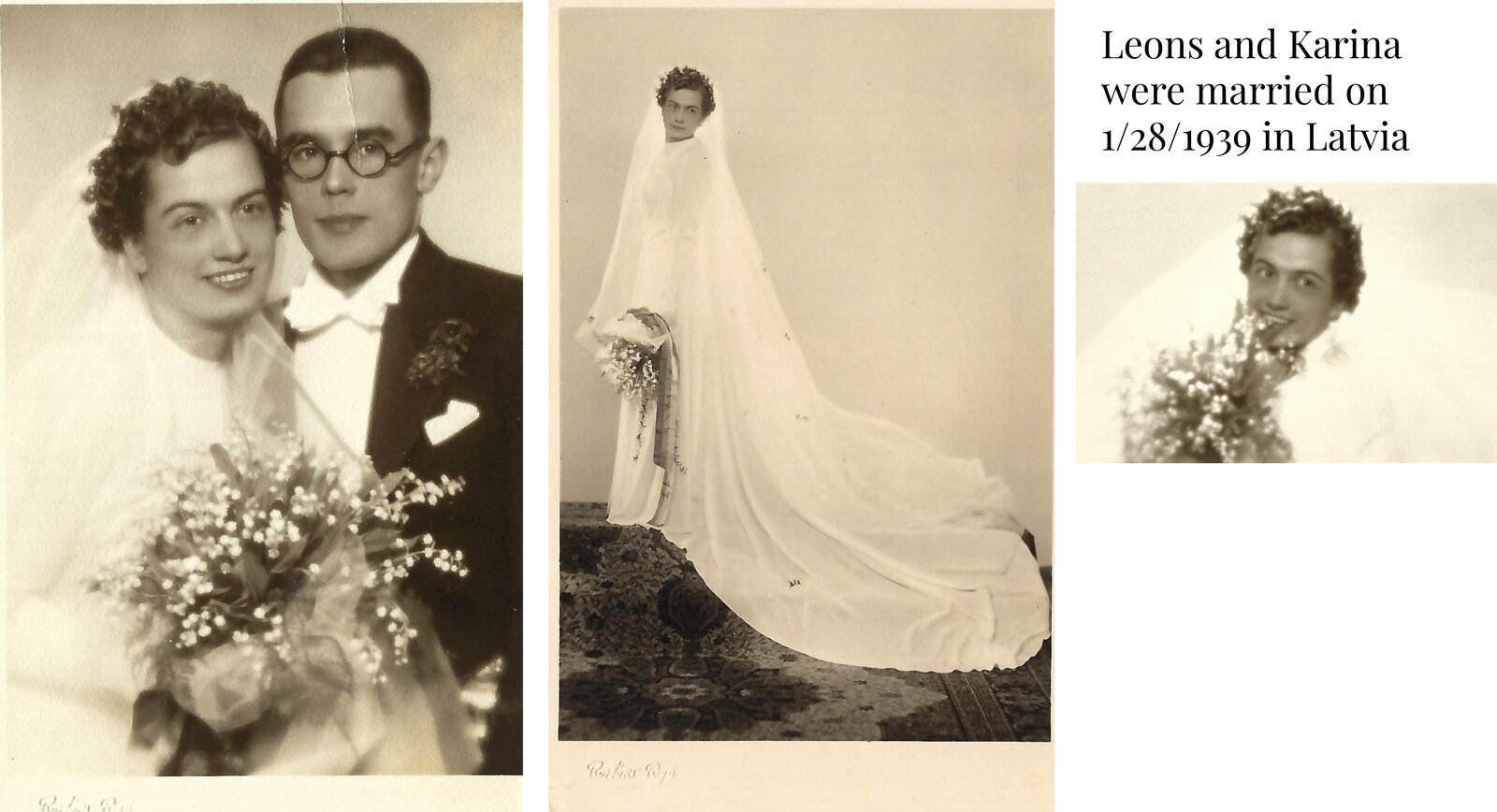
Leons & Karina Robežnieks
"Opa" and "Oma," married January 28, 1939, in Latvia.
Ilze & Mara Robežnieks
Ilze (b. Dec. 1942, Riga) and Mara (b. July 1947, in a DP camp near Nuremberg) — the two daughters who made the crossing.
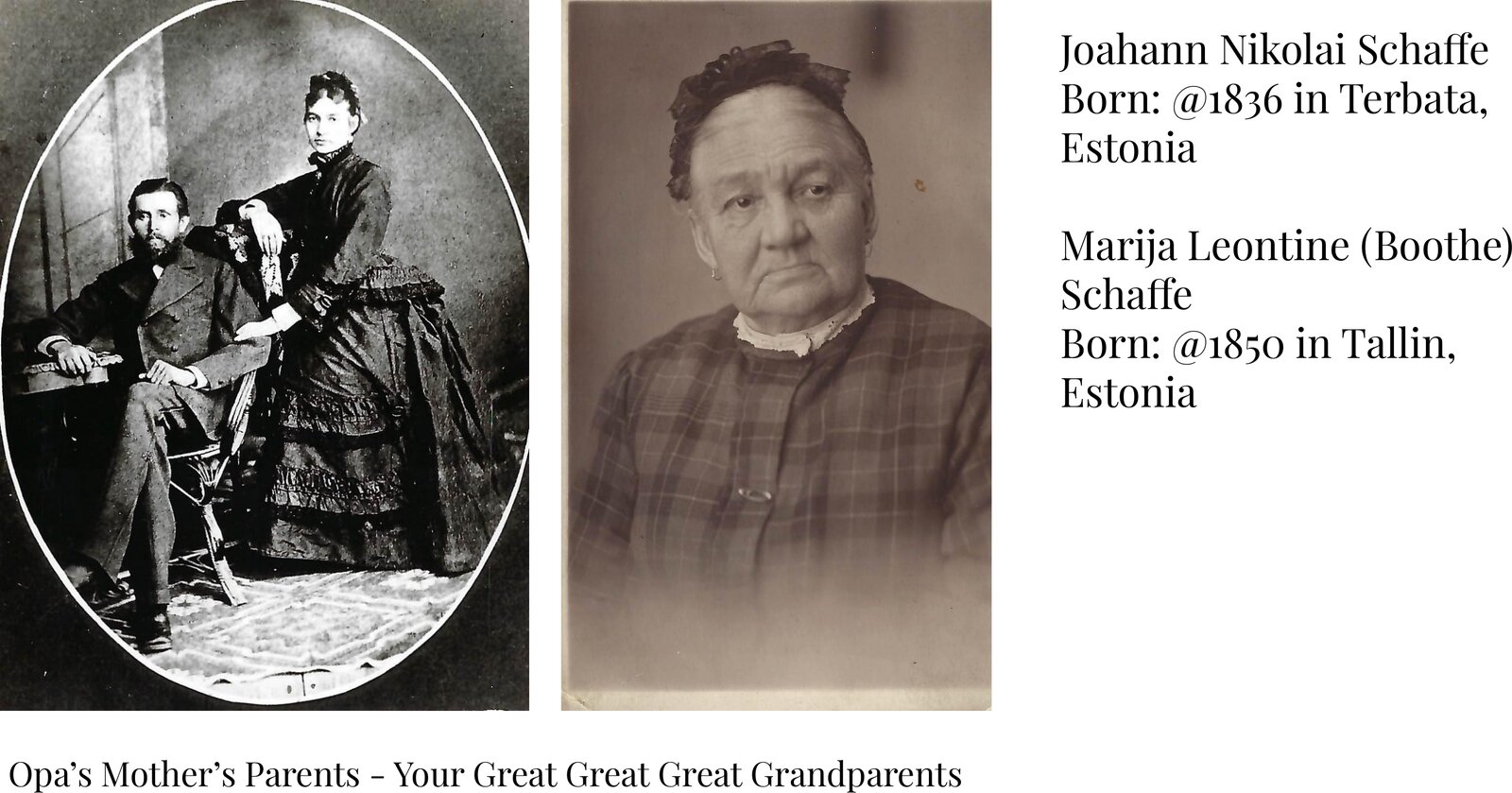
Schaffe family, Estonia
The earliest generation in the scrapbook: Joahann Nikolai Schaffe (b. c.1836) and Marija Leontine Schaffe (b. c.1850), of Tartu and Tallinn.
Keepsakes
A few of the objects that made the journey, still kept in the family today.
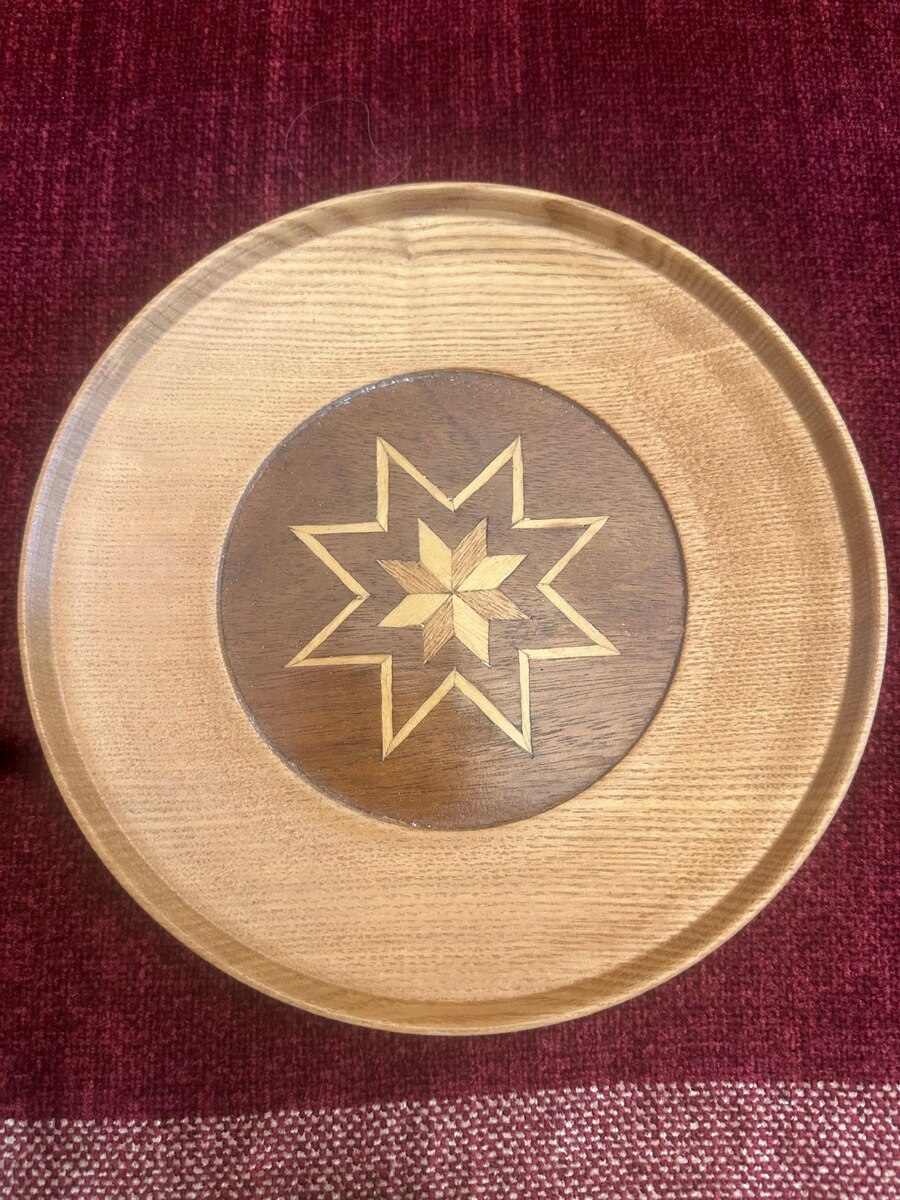
Carved star plate
A wooden serving plate inlaid with the Auseklis, a traditional Latvian star symbol, alongside pieces of Latvian folk pottery and amber jewelry kept in the family for generations.
Folk-dress doll
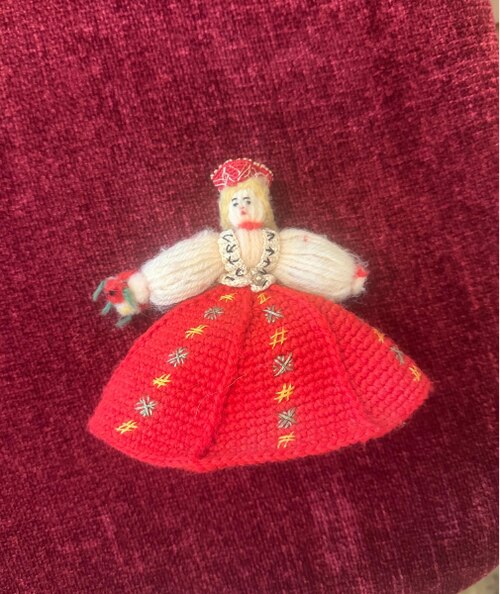
A small handmade doll in traditional Latvian dress — one of several folk costume pieces, amber necklaces, and brooches the family still has today.
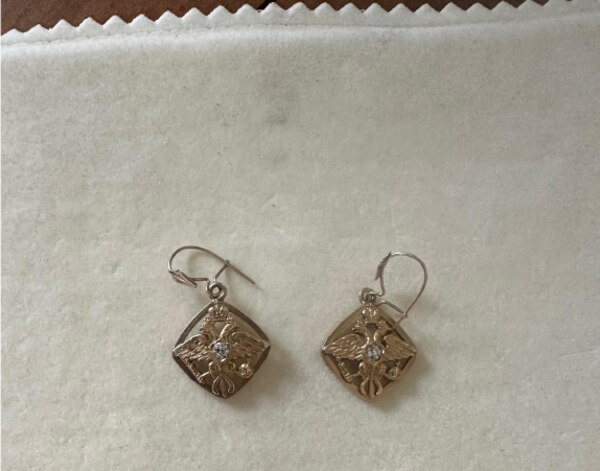
The cufflinks, later earrings
Family history traces these back to a gift from the tsar. They were later turned into a pair of earrings, which are still kept in the family today. My grandmother had them appraised on Antiques Roadshow.